Address: 18/22 Makland Dr, Derrimut VIC 3030
Call Us : +614 3539 1980

Are you seeking peace and a deeper understanding of the Dharma?
In Buddhism, meditation is not only a way to calm the mind but also a path to wisdom and liberation. It nurtures sati (mindfulness), samādhi (concentration), and ultimately paññā (insight). Through meditation, we come to see things as they truly are—impermanent, unsatisfactory, and without a fixed self.
What is meditation in Buddhism?
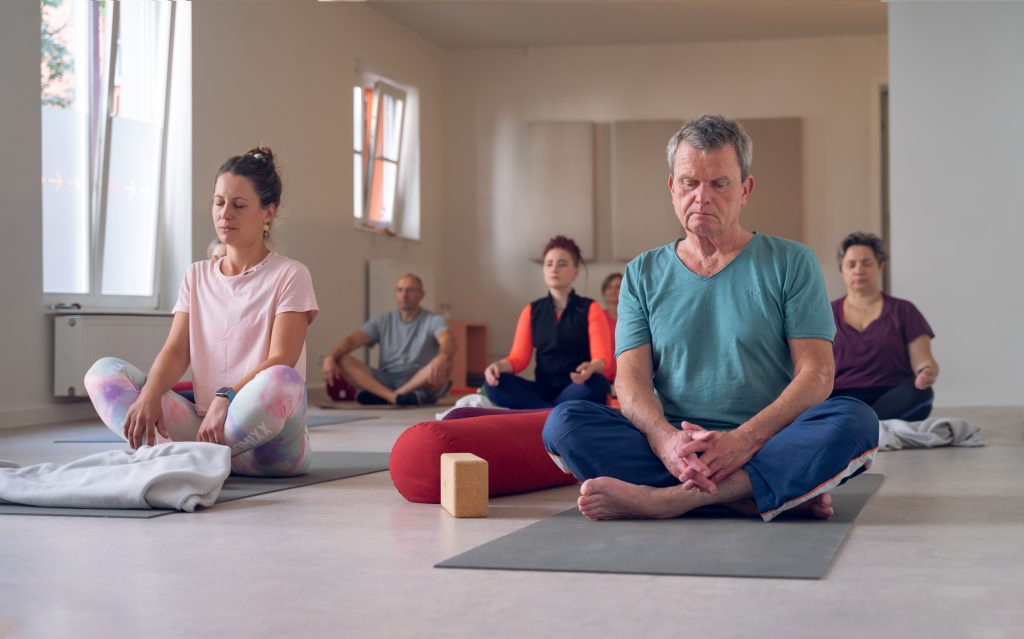
Meditation (bhāvanā, “mental cultivation”) lies at the heart of the Buddha’s path. It is not a means of escape, but the direct way of meeting life as it truly is.
Through meditation we turn inward, resting in the bodhi-mind—not chasing or suppressing thoughts, but seeing clearly the arising and ceasing of all phenomena. Thoughts, feelings, and sensations are recognised as conditioned processes, like bubbles on a stream: appearing briefly, then dissolving without essence.
As insight deepens, we awaken to the truth that our Buddha-nature and human nature are not two. Like wave and ocean, they are one—thoughts and emotions are the waves, restless and changing, while Buddha-nature is the deep ocean: vast, still, and boundless. What we habitually call “I” or “mine” is revealed as nothing more than the play of aggregates (khandhā/skandhas): form, feeling, perception, formations, and consciousness. Seeing them arise and pass without owner, the grip of craving and aversion begins to loosen.
Thus meditation is not merely calming the mind, but opening the eye of wisdom—seeing the impermanent, the unsatisfactory, and the selfless nature of all experience.
Benefits of Buddhist meditation
Regular practice brings both worldly and spiritual fruits:
- Meta-awareness — knowing that you are aware; observing and recognising thought streams without getting swept away.
- Calm and clarity — reduced stress, anxiety, and restlessness.
- Compassion and loving-kindness (mettā) — a softer, braver heart toward self and others.
- Wisdom (vipassanā) — insight into impermanence, unsatisfactoriness, and non-self.
- Freedom from clinging — less entanglement in anger, fear, guilt, pride, unfinished business, or greed.
- Resilience and equanimity — composure and steadiness amid change and chaos.
Ultimately, meditation supports the path toward awakening—freedom from suffering as taught in the Four Noble Truths
Forms of Buddhist meditation
Below are representative practices across major traditions.
Theravāda tradition
- Ānāpānasati (Mindfulness of Breathing)
Observing the natural breath to cultivate calm (samādhi) and insight (vipassanā). - Satipaṭṭhāna (Four Foundations of Mindfulness)
Mindfulness of body, feelings, mind, and dhammas—the core framework for insight. - Mettā bhāvanā (Loving-kindness)
Generating goodwill for oneself and radiating it outward to all beings. - Asubha bhāvanā (Contemplation of Impurities)
Reflecting on unattractive aspects of the body to counter lust and attachment. - Maraṇānussati (Mindfulness of Death)
Contemplating mortality to inspire urgency (saṃvega) in practice. - Kasiṇa meditation
Concentration on elemental objects (earth, fire, water, space, etc.) to develop deep absorptions (jhānas). - Anussati (Recollections)
Reflecting on the Buddha, Dhamma, Saṅgha, morality, generosity, or devas to cultivate joy and confidence.
Zen / Chan tradition
- Zazen (“just sitting”)
Resting in open, non-clinging awareness. - Kōan meditation
Working with paradoxical prompts to cut through conceptual habits. - Hara awareness
Resting attention in the lower abdomen (tanden/hara) to ground body–mind.
Vajrayāna / Tantric tradition
- Deity visualisation (Deity Yoga)
Visualising enlightened forms (yidams) with mantra recitation, uniting compassion and wisdom. - Tsa-lung & chakras (subtle-body meditation)
Working with channels (tsa), winds (rlung), and centres (chakras) to transform subtle energies into wisdom.- Tummo (inner-heat meditation at the navel chakra)
- Six Yogas of Nāropa (advanced completion-stage practices)
- Mahāmudrā & Dzogchen (Great Perfection)
Direct recognition of the mind’s nature—spacious, luminous, and free.
Though each method differs in emphasis, they share the same aim: cultivating mindfulness, reducing clinging, and nurturing the path toward liberation.
In essence, Buddhist meditation is both medicine and path. It soothes the restless mind, awakens compassion, and reveals the wisdom of seeing reality as it truly is.
Which one suits me?
If your mind asks, “Which is the best meditation technique?”
The Dharma answer is:
There is no single best meditation for all times. As conditions change, so too does the practice that serves you best. What calms the mind today may not be what reveals wisdom tomorrow. The best meditation is the one that helps you take the next step on the path
Choose the method that:
- You can practise daily without strain or excuse.
- Leads to greater kindness in how you speak and act.
- Makes clinging lighter and insight clearer over weeks and months.
- Stands up to wise reflection (cf. the spirit of the Kālāma Sutta): it brings benefit to you and others.
Temperament differs. Some thrive with breath and body mindfulness; others open through mettā; some, with guidance, mature through subtle-body or non-dual practices. There is no single throne; there is only the path under your feet. Walk the piece you can walk today—steadily, honestly, and with a good heart. The “best” practice is the one that keeps turning you toward freedom, and leads you closer to seeing clearly: ‘This is not mine, this I am not, this is not my self.’ Whatever practice brings you nearer to releasing grasping—that is the best one.”