
Guān Yīn hears you when you call. That’s not metaphor — it’s a bodhisattva’s vow, kept across countless forms, in every direction, for as long as beings suffer.
Guān Yīn is what compassionate responsiveness looks like once self-grasping stops obstructing it. The dharma arising isn’t yours to own — it’s empty of a fixed hearer. Guān Yīn isn’t the part of you that was never deceived. Guān Yīn is what’s already possible the instant deception stops. You were never just the noise — not because something quiet was hiding underneath, watching. Because there was never a fixed you for the noise to convince.
And still — Guān Yīn answers. Empty of a fixed self, and no less real for it.
Weekly Activities
Weekly Sutra Recitation or Repentence
Shurangama Mantra & 21x Compassionate Mantra (or108 Guan Yin recitation)
WEEKLY Dharma Classes & QnA
Lead by Venerable JinHe Shr. Join us on every Wednesday Evening to understand the psychology of the mind: there'll be Q&A, Sutra/ Dharma interpretation. Participants from around the world. This is a free session, join the WhatsApp Group to get the Zoom Link.
Qi-Gong and Breathing Activities
Cost: Free or By Donation.
Meditation
& Awareness
Cost: Free or By Donation.
Mindful Vegetarian Gathering
Cost: Free, By Donation, or share a meal
The Dharma teaches us to turn inward and not to seek or blame external conditions, people, or circumstances for the events that arise around us. Instead, it guides us to take responsibility, cultivate virtue, and transform affliction into wisdom.
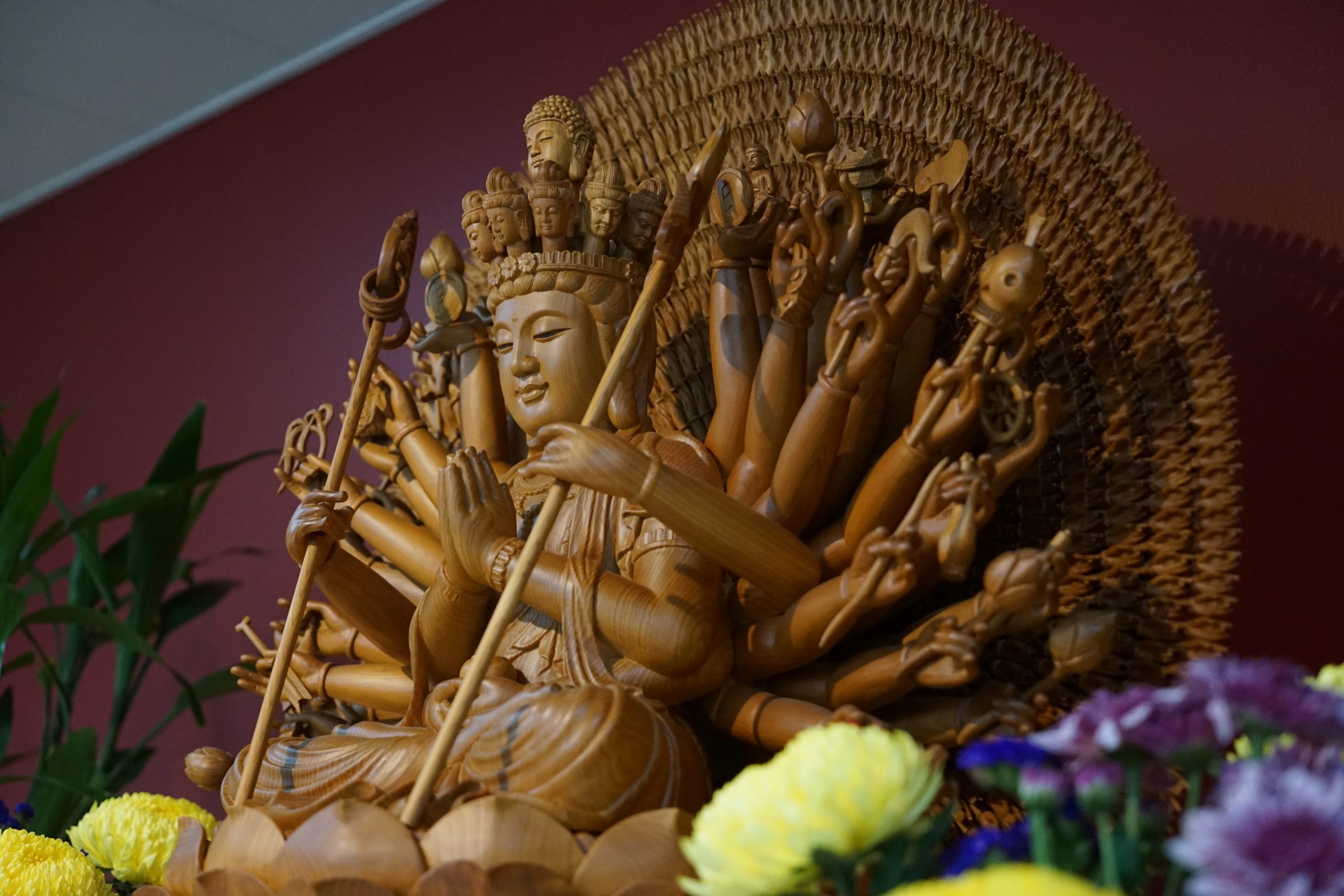
Guan Yin serves as a profound reminder of the Buddha-nature within us all. Although ignorance and misconception lead some to believe that Buddhists “pray to statues or shrines,” in truth, Guan Yin (as depicted in the image on the left) and all images of Buddhas are skilful means—mirrors reflecting the truth that we each possess the seed of awakening, the bodhisattva spirit, and the potential for Buddhahood.
The symbolism of Guan Yin’s form is deep and multilayered. Often the statue shows many heads and hands. The heads above the crown represent the presence and awareness of various Buddha natures, reminding us to awaken and embody their wisdom in resonance with our own practice. The countless hands represent the many skilful means, responsibilities, and compassionate actions of a bodhisattva. Each hand often holds a different implement, symbolising the tools needed to dispel delusion, heal suffering, and extend compassion to all realms of life.
When we bow to the Buddha or to a bodhisattva, we are not merely paying respect to the awakened qualities of wisdom, compassion, and boundless energy that they embody. At the same time, we are surrendering our ego and arrogance. This act of bowing is a practice of humility and a reminder to return to our true nature.
